Beyond The White Cube
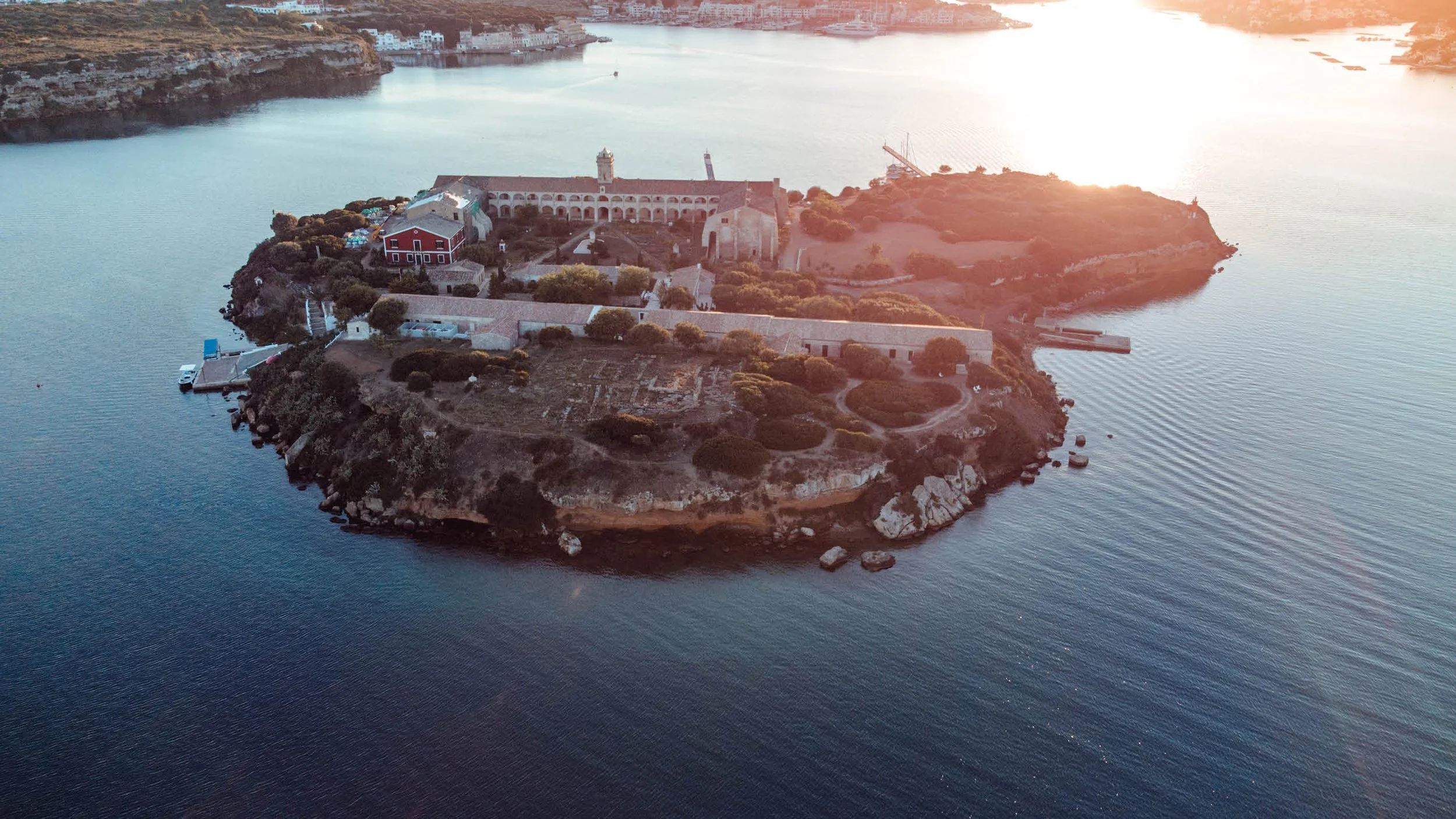
Hauser & Wirth Menorca on Illa del Rei. Photography ©Be Creative/Daniel Schäfer/Hauser & Wirth
Illa del Rei is a tiny spot of land off the Balearic island of Menorca in Spain. A former base for an abandoned military hospital built in the 18th century by the British, and with remains of a Paleo-Christian basilica, it's been home to an enchanting art space since 2021.
Hauser & Wirth Menorca is a bit of a hybrid. It comprises an art gallery with a workshop for local school kids. The sculpture park is landscaped by the leading figure of the "new perennial" movement Piet Oudolf. The cantina serves seasonal food and locally produced wines. And there's access to a small beach to cool off in the hot summer months. To get there, you hop on a dedicated yellow catamaran from Mahón harbour, and it's recommended to time the return trip to coincide with the island's gorgeous sunsets. Hauser & Wirth Menorca offers a highly visceral art experience.
The Swiss gallery has another such outpost on the rolling hills of Somerset in England. Housed on the site of an old farm, the farmhouse acts as a gallery, gift shop and an open-kitchen restaurant, while the outbuildings are home to resident artists. The surroundings are landscaped by Oudolf with a former Serpentine Pavilion by the Chilean architect Smiljan Radić, hosting events, supper clubs and, in the summer, open-air yoga. Meanwhile, in burgeoning downtown Los Angeles in a former mill, Hauser & Wirth's LA gallery sits similarly at the intersection of art, architecture, education and entertainment.
These spaces are part of a broader movement within the art world, one that is taking visual art out of the traditional "white cube" gallery space as a way of inviting viewers to experience art differently. Or, as the sculptor Antony Gormley noted a little while ago on the BBC's Desert Island Discs, it's important to liberate art from the straitjacket of both the museum and the gallery space.
There are countless other concepts exploring alternative ways to show art, most successfully thriving global art fairs Frieze, Art Basel and the Venice Biennale, as well as more local events such as the latest BAD+ Art Fair (Bordeaux + Art + Design) — inaugurated in 2022 as the first international fair in the wine-growing region.
Meanwhile, during the pandemic, the technology for enabling digital showrooms and virtual auctions matured to a point where physical and digital now run seamlessly. NFTs have further expanded our vision of art and ownership. These multi-vehicles help expose artists to wider audiences and are also excellent storytelling tools and make complete commercial sense for the artist and gallerist.
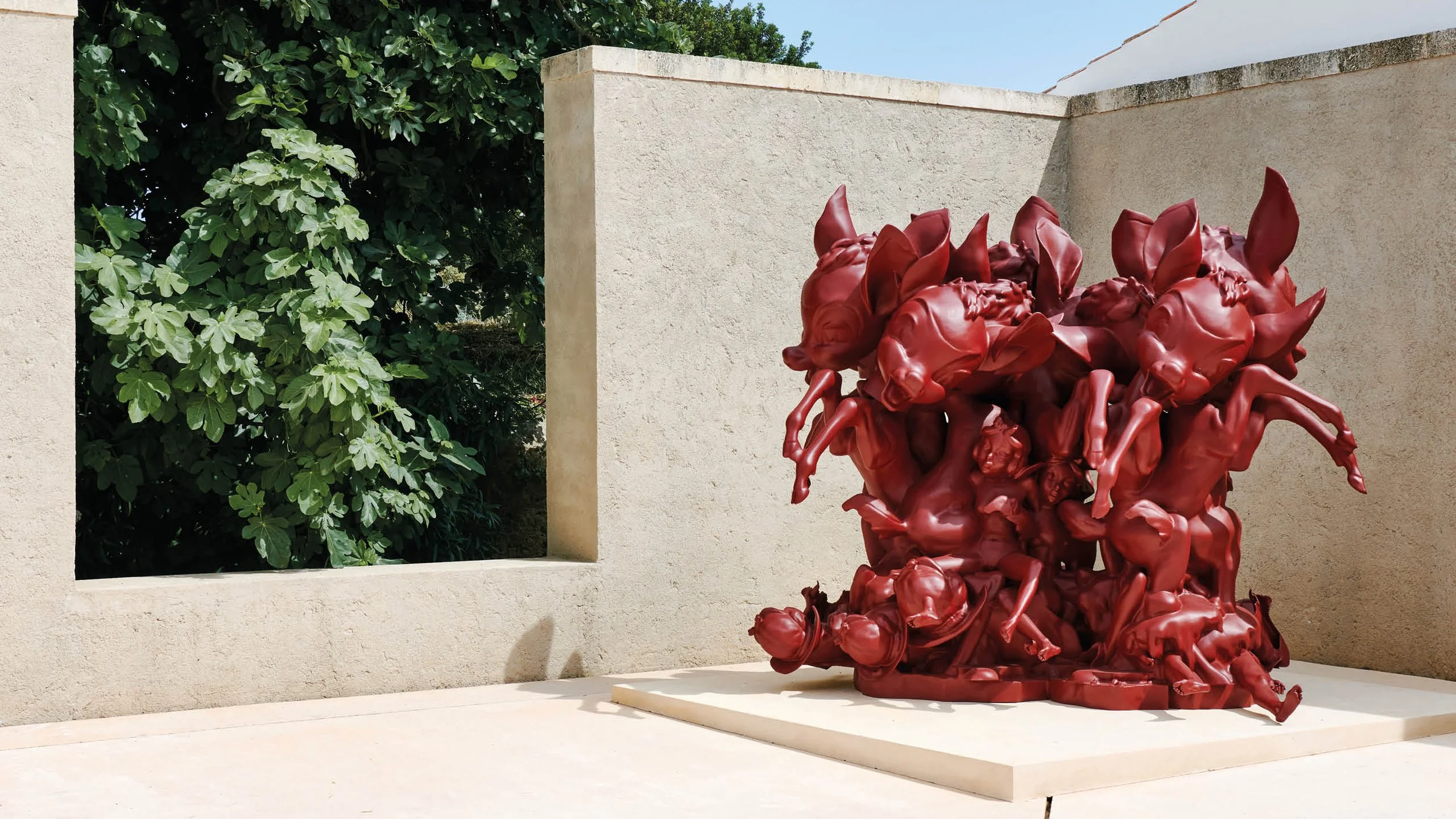
Paul McCarthy White Snow Party (2014), Hauser & Wirth Menorca. Photography ©Be Creative/Daniel Schäfer
Curious minds
Exciting and challenging environments will naturally inspire exhibiting artists. In 2022, tasked to create a show for Hauser & Wirth Menorca, New York-based artist Rashid Johnson's "Sodade" became a powerful response to location and the concept of islanders on land with its fair share of movement and migration. Having visited "Sodade," it's hard to imagine it having such a visceral impact if shown in a standard urban gallery.
Neil Wenman, Hauser & Wirth partner and global creative director, agrees that an unusual location can impact both the artist and curator's creative process. "Another benefit is that visitors have mostly travelled here specifically, so they will spend more time and focus on the art," he says. "It has helped us think about the gallery's role in educating and inclusivity. Last year we had our millionth visitor to Somerset. It is a whole new audience."
Inspiration need not be confined to the artist alone. What if a great space and its conceptual offering got the architect, interior designers, and even the chef and sommelier's creativity pulsing?
This summer Ladbroke Hall opened its doors with the promise of being a community hub for its west London neighbourhoods of Notting Hill and Ladbroke Grove. The flagship for Carpenters Workshop Gallery, the 1903 Grade II-listed former home to the Sunbeam Talbot Motor Company is a vast 43,000 square foot space uniting art and design, food and wine, live music, dance and theatre. Ladbroke Hall restaurant's interior is by Italian artist and designer Vincenzo De Cotiis, the garden landscaped by Chelsea Flower Show winner Luciano Giubbilei, and Gambero Rosso's 2020 "Chef of the Year" winner, Emanuele Pollini, is at its helm.
Beverage director Romain Audrerie feels his wine programme needs to reflect the venue's core values to be accessible and sustainable, but also unique. "We want the wine culture to echo the diversity found in contemporary art, and the wine list to promote eclecticism with labels from lesser-known appellations from the Loire valley or from the minerally-driven Etna volcano in Sicily," he says. Meanwhile, the building's heritage site has informed a selection of bottles from more traditional appellations such as Barolo and Burgundy, while also featuring rare vintages from exclusive allocations.
"There is an appetite to look for more experiential spaces," says Loïc Le Gaillard, who co-founded Carpenters Workshop with Julien Lombrail in 2006. Through their galleries in London, Paris, New York and Los Angeles, the duo has been instrumental in elevating collectible design and blurring the line between art and design. Ladbroke Hall hopes to break similar ground by offering a space that helps us explore culture in more exciting and unusual ways.
Le Gaillard explains, "We want to have a place where we welcome our artists and designers on a non-transactional basis. We want to engage with this beautiful community who have been entrusting us for the past 20 years, over a glass of wine, some pasta, a little theatre, rather than the usual commercial setting that can make it extremely boring."
Notting Hill has a vibrant artistic and musical heritage and a deep sense of pride. A community programme is therefore central to Ladbroke Hall's vision, involving collaborating with local creatives, youth initiatives, and education and mentoring opportunities in art, design, music and dining. Le Gaillard says: "We want to work with the community to ensure we're not an isolated privileged hub. This is our own little utopian fantasy."
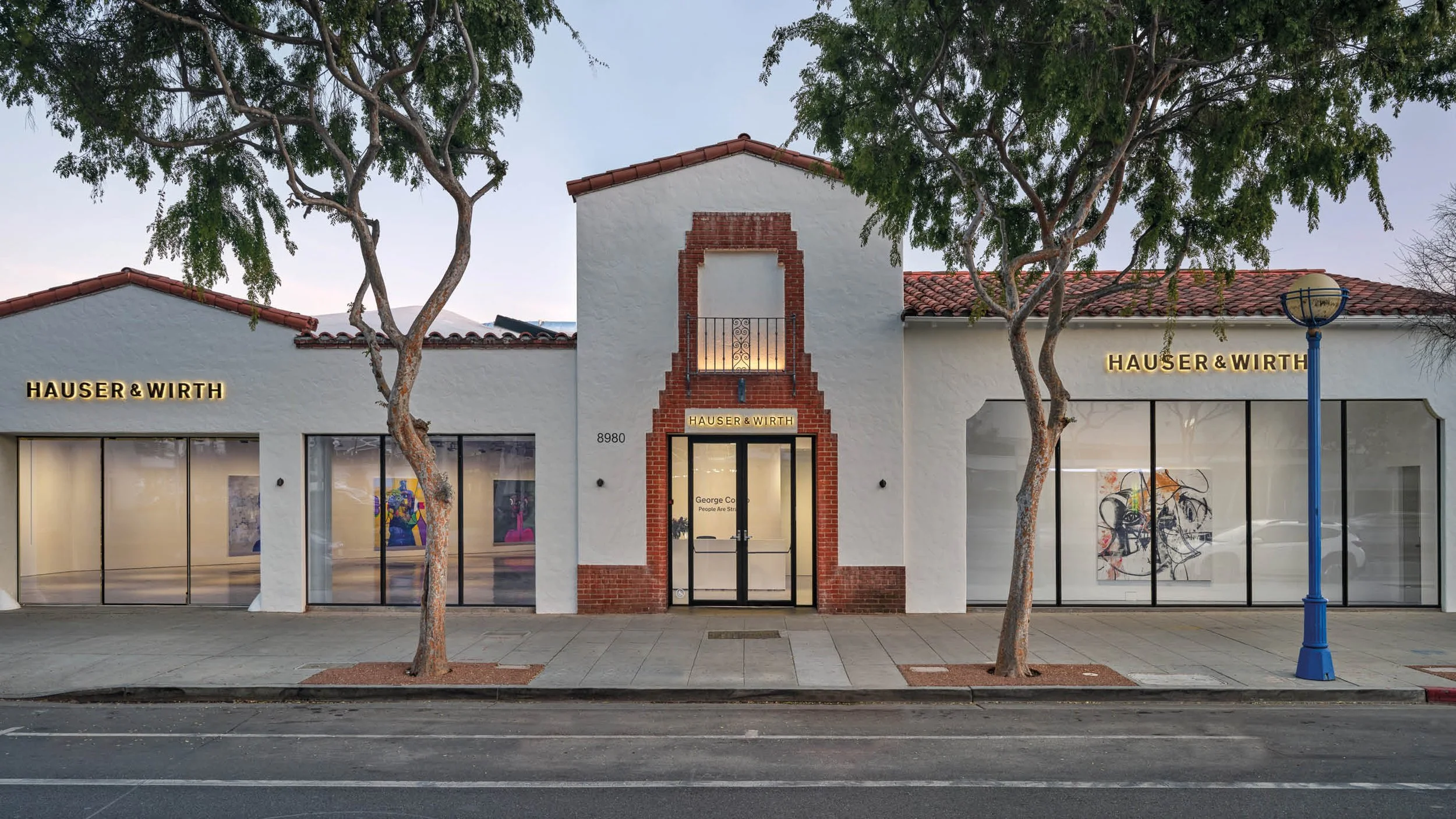
Hauser & Wirth Los Angeles. Photography ©Hauser & Wirth
Treading a fine line
Not all in the art world are beaming with excitement, though. There is a valid concern that focusing too much on experience runs the risk of turning art into mere entertainment and the gallery into an amusement park. Then again, as inclusive shows such as "Van Gogh: The Immersive Experience" have demonstrated, viewing art in these easily digestible, immersive and Instagrammable environments will tease the selfie brigade, but they may also be transformative for some and ignite a passion for art. And that in itself is not a bad thing.
Wenman believes it all depends on the exhibition. "Some are more academic and require much more curatorial expertise than others. Then these new approaches or environments can open up the possibility of engaging with the arts, giving a sense of how art can reflect on different core subject matters, whether sustainability or the human condition."
Sometimes the journey itself can be instrumental to the experience. "Henry Moore: Sharing Form," at Hauser & Wirth Somerset last year, focused on the profound impact of Stonehenge on the great British artist. The drive from London went past these otherworldly prehistoric monuments with the experience further enlivening Moore's sculptures.
"There is room for play, and we should be able to create a space for this," suggests Wenman. "You can have an underlying conception and communicate big ideas through play and irreverence. It is about experiencing art differently, ways in which we hope to open up the audience to relax and then walk away with a different perspective."
This article was first published in Voices magazine