Where Two Cuisines Collide
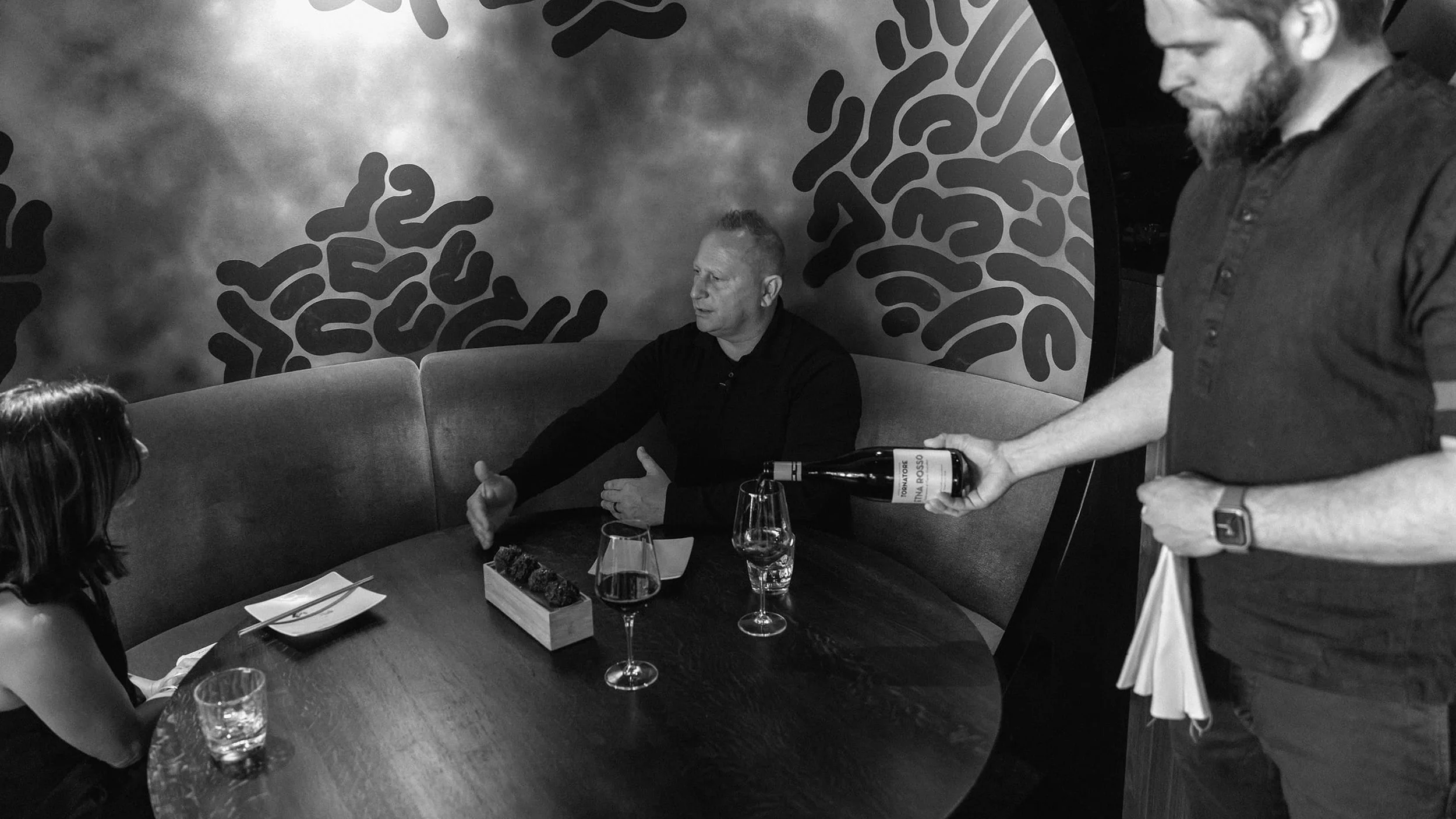
With Kurt Zdesar at Chotto Matte in London. Photography Leigh Banks
“My life is food. I love food. I travel to eat. I live to eat. And I work in the restaurant world getting paid to do what I love the most,” says Kurt Zdesar, the light in his eyes illuminating his statement. The founder of Chotto Matte continues in measured sentences, but with youthful wonderment. “It's on my travels where I get to see and experience new cuisines. It's not that I look out for the next big thing, but when I come across something I love, I have to make it happen.”
We're meeting at his London restaurant to discuss his mission to take Nikkei cuisine to key destinations around the world, Chotto style of course, which means in stylish settings, and with a high dose of commissioned art and music. Meanwhile we've brought along a few wines from the Maze Row collection to pair with Chotto's most popular recipes. It's a bit of an explorative mission, which works on some dishes, less so on others.
“We've always had a strong wine programme. Not necessarily the biggest or the most expensive, but a unique one,” Zdesar says as he reviews the wines and the dishes suggested by him and his team (see pairings below). “I'm looking forward to this,” he says with a smile — one of many, as Zdesar proves to be a generous host and interviewee. He is also a surprisingly candid one. “The main difficulty is in pairing an entire meal with one or two wines, simply because of the sheer diversity of Nikkei flavours. On one dish you may find spice, sweetness, sour — a host of flavours that react in your mouth. Then in the following you'll experience a completely different profile.”
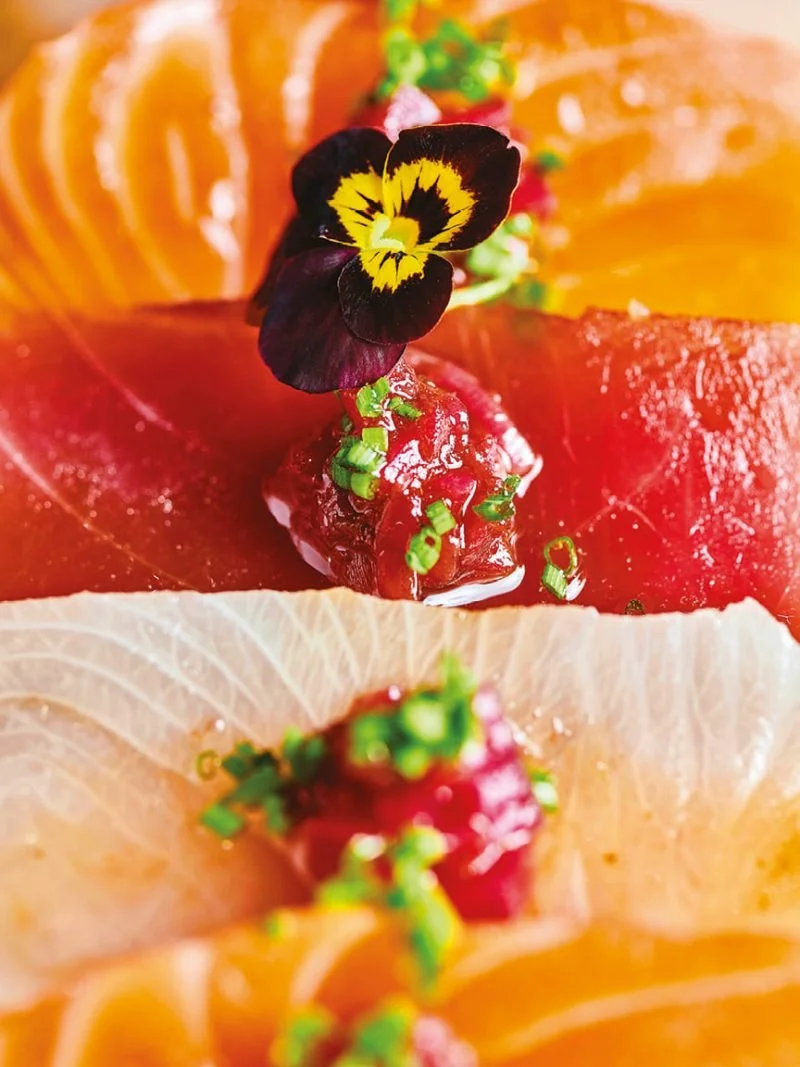
Chotto Matte’s evolving recipes are inspired by Nikkei cuisine. Photography Chotto Matte
The story
Zdesar started Chotto Matte a decade ago with a single space in Soho, London, and has since expanded to have two more UK outlets, and with restaurants in Miami and Toronto, Doha and Riyadh. Next spring will see the opening of Chotto Los Angeles and San Francisco, followed by outposts in Nashville and Philadelphia, Rome and Milan.
Chotto specialises in Nikkei cuisine, a Peruvian and Japanese invention with a layered past, shaped by movement and migration. The word Nikkei refers to Japanese émigrés and their descendants who have a significant presence in South America, especially in Brazil and Peru, with settlements that started over a century ago when farmers came to work at coastal sugar plantations. Nikkei cuisine is a lively blend of the two cultures' culinary traditions, combining the best of Japanese clean cooking with Peruvian warmth and hospitality, while working with fresh seasonal ingredients. Now Chotto is taking a gastronomy that is over a hundred years old on another culinary world journey.
It needs to be said that Zdesar is somewhat of a rock star in the restaurant world — his all-black signature look is a visual nod to this — having established the famed Nobu brand in Europe, then successfully set up the dumpling chain Ping Pong, amongst other ventures. He tells me he came across Nikkei cuisine by chance. In Shanghai in 2004 looking for talent and recipes for Ping Pong, he happened upon a restaurant offering a new concept for him: Nikkei. Naturally, he had to have a taste. "Wow, it was so vibrant, fresh, light," he says, speaking quickly, his voice charged with enthusiasm. "I thought to myself, I could eat this daily, because it's clean and fresh, pure, healthy, but also exciting and tantalising to the taste buds. I knew I had to do something with it. It was an overwhelming feeling."
The original Chotto Soho was a heady affair. The opening, in 2013, hosted the Dazed & Confused post runway party to end London Fashion Week, which pretty much set the scene for what was to become one of the city's hottest night-time destinations. There was commissioned street art inside, live DJs and culinary theatre. This was dining as pure experience — and the place was an instant success amongst twenty and thirty-somethings.
The brand has since evolved — matured may be the right description. Others started mimicking the Soho experience and what was once considered fresh needed a rethink. And so Zdesar took the opportunity during the pandemic closures to completely rebrand Chotto, creating a new logo, restructuring the business and signing sites for new venues around the world. "“We're not a brand that will stay stagnant. We're evolving — constantly. Soho opened ten years ago, the customer was younger then and so was I. We are growing up together,” he muses. “I see this as the beginning of the next ten years.”
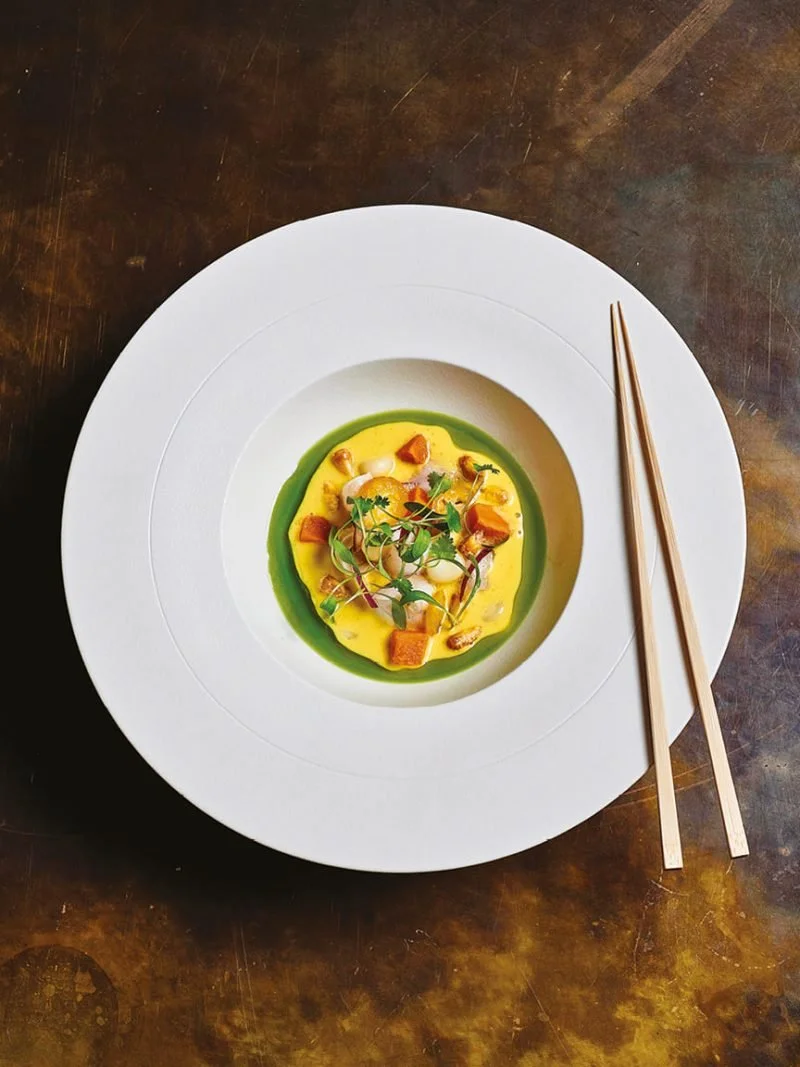
Chotto Matte’s evolving recipes are inspired by Nikkei cuisine. Photography Chotto Matte
Fresh starts
Experience at the new Chotto is now centred confidently around the culinary delights. And the dishes certainly bring a smile to your face. These are works of art, artisan wonders, beautifully created, the colours and textures adding to the sensory experience. Everything here is designed to be unique, from the bespoke furniture to the commissioned artwork, even the plates, created by an unnamed artisan (he won't divulge the maker) who Zdesar happened upon on a family holiday. They act as the chef's canvas with shapes and colours designed to complement each dish. The new Chotto offers a more adult form of culinary theatre.
“The brand is my baby and I have a very strong idea as to what it should be,” says Zdesar as, chopsticks in hand, we dig into our first dish. The dragon roll happens to pair perfectly with the Pietrarizzo Etna Bianco, from the Tornatore estate in Sicily. “Everything we do is about being honest, original and unique. The product, the ingredients, the wines, they all have to be the best we can source.” Zdesar trained as a chef but stepped away from the kitchen a long time ago. “Now I work side-by-side with our head chef Jordan Sclare, constantly evolving the menu. We've worked together for almost 30 years, so he understands my mental vision and has the skills to recreate it.”
He tells me his first Chotto menu mood board featured pictures of art and architecture, of textiles, colour palettes and powder paint used in Peru to paint walls — everything other than food. For Zdesar it is about mood creation. “The dishes are artistic, as are the plates and how we serve the food. I see it as craft and artistry as much as a meal.” As if to prove this point, the Argentinian red prawn truffles arrive. The sculptural dish is meant to mimic a black truffle, meanwhile inside these rough-looking parcels are delicate sweet prawns, with the whole thing infused with truffle, which pairs well with our Tornatore Etna Rosso.
We discuss how with most dishes, typically the full satisfaction arrives in those first few mouthfuls, after which the excitement levels dip. It therefore follows that smaller portions that are made to be shared, say nine courses, will provide nine flavour profiles. So, to ensure guests experience a full flavour journey, Chotto has put together set tasting menus, including a plant-based and vegan one.
“If our guests decide to choose individual dishes, we steer them away from ordering two with miso in a row, instead making sure they have a journey of flavours and temperatures,” he says. “Nikkei does this so well. You can start with a light dish with citrus notes that get your appetite going, follow with a richer fried dish, and continue with a lighter acidic dish, such as a ceviche.”
Zdesar is working hard for the restaurants to be as organic and mindful of waste and the environment as possible. He is also keen to support locals. “Like our food supply chain, our wine programme is about supporting the local talent, local vineyards and local economies." He sees customers drinking wines from their own region; wines they are more familiar with. Chotto Miami therefore may feature a high dose of American wines, but since the customers tend to be well travelled, the programme also has interesting world wines. It's about adapting to each region: "In Milan and Rome Italian wines will feature heavily. If we don't, there will be carnage,” he says jokingly.
For easy navigation Chotto breaks its wine programme into sections: light, medium and full-bodied. That, alongside the descriptive notes and flavour profile, helps the customer choose independently, although there is a sommelier at hand to help. The other criteria is to offer wines that are a reminder of certain classics but can be served at a more affordable price. He feels New World wines can offer a chance to explore great wines within the budget to broaden people's experience and create a more interesting wine list.
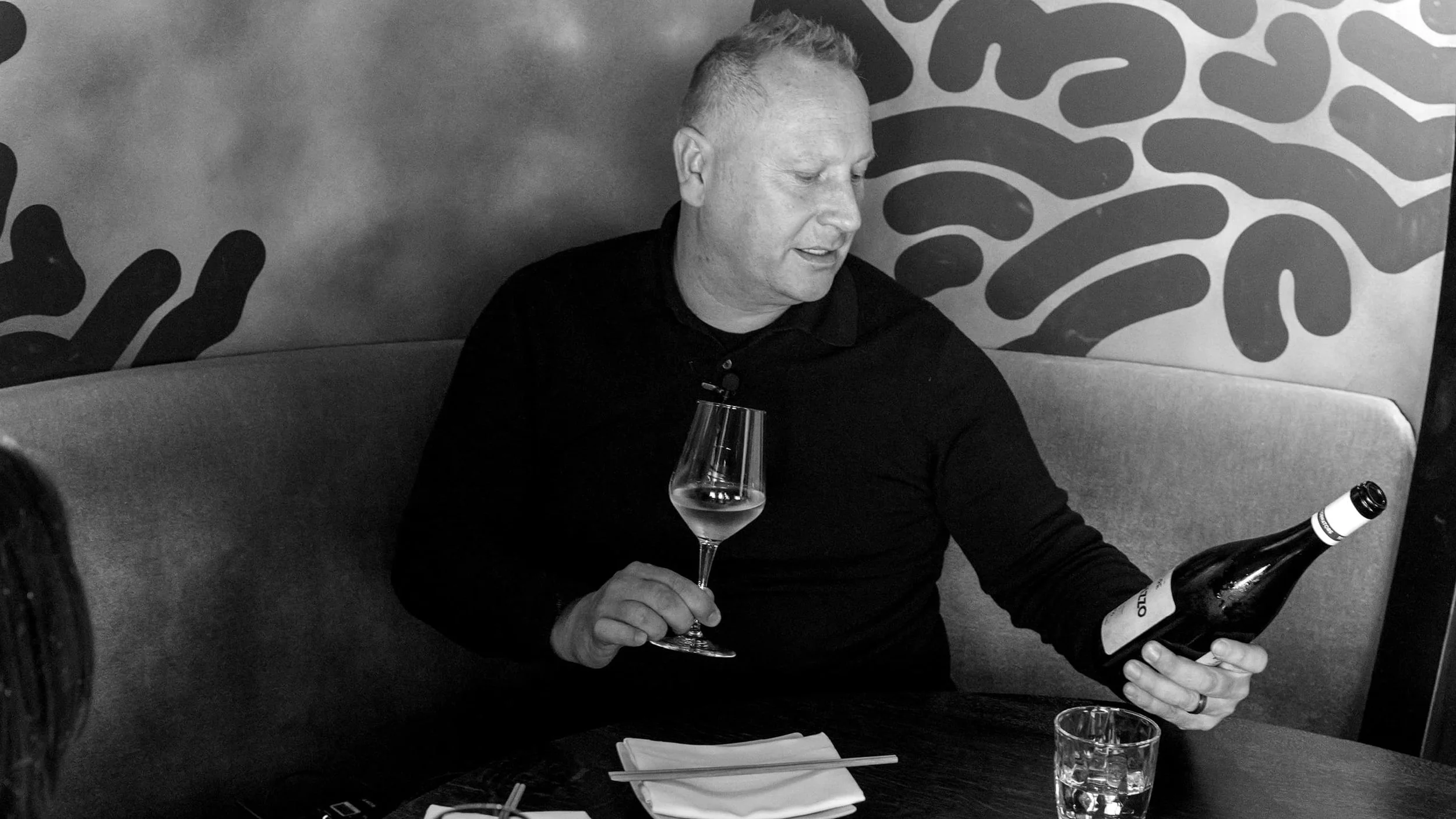
Kurt Zdesar pairing Sicilian producer Tornatore’s wines with his dishes. Photography ©Leigh Banks
Zdesar admits the wine programme is evolving with the customer profile. In Toronto, where Chotto has been voted best restaurant in the city, the location underneath the stock exchange means guests are corporate types who are likely to spend generously on wine. The same applies to Miami, where Chotto customers are on holiday and will spend money for a fun experience. He is excited to see the development in San Francisco and Los Angeles.
In San Francisco, Chotto will be just off Union Square, right in the heart of the city, in a purpose-built restaurant space. The Beverly Hills restaurant is on North Cannon Drive, with a rooftop overlooking the hills and onto the Hollywood sign in the distance. "I'm setting up a permanent telescope," he muses. And since it's al fresco dining, the wine programme will feature high on whites and rosés, many of which are likely to be from California vineyards.
We have brought along two wines from The Language of Yes, a producer from Santa Maria Valley, in California's central coast. The Grenache we pair with Barriguita de chanchito, a rich and spicy dish of pork belly. Meanwhile the Syrah is a marriage made in heaven with the Chuleta de cordero ahumada, a flavoursome delicate lamb chop, a dish inspired by my host's travels to the stylish Greek island of Mykonos. Another layer added to the tapestry of Nikkei as it sets sail around the world in a culinary migration of sorts.
This article was first published in Voices magazine